The Ballad of Don Quinn 1992
The Ballad of Don Quinn tells the story of southern Saskatchewan’s original punk rocker and his attempts to resurrect his band a decade after their scarcely noticed demise.
Quinn was certainly influenced by Jim Jarmusch’s Stranger Than Paradise, and to some degree by Cervantes’ Don Quixote.
This was my first film after “film school”, shot over the course of four weekends in October 1990, with a small volunteer crew of friends from film school days and a cast of mostly first-time actors.
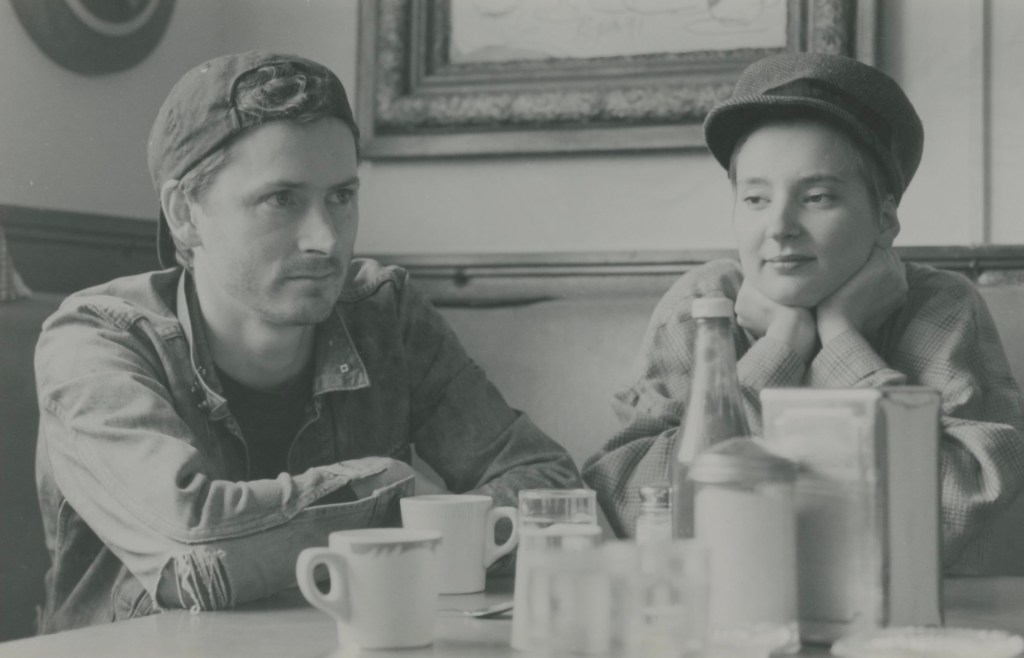
Mike Burns, a Regina music impresario, played the title character in his first acting role. Mike would go on to be the head of ACTRA in Saskatchewan for many years. Laura Pollock, then a film student at the U of R played Ziggy Panzer. The cast included Chris Cunningham, Dave Loblaw, and Toronto filmmaker Alan Zweig, who spent a year in Regina teaching at the U of R. When I relocated to Toronto, I cast Alan in my film Ecstasy.
A key scene in the film takes place in The New Utopia Cafe. Run by Regina legend Roger Ing, New Utopia was a real bohemian hub, with Roger pouring coffee and making paintings on all manner of surfaces, for patrons who’d linger for hours and often walk out with a painting or two under their arms. The scene begins with a dolly shot from Jean Oser, over to a booth with Don and Ziggy.
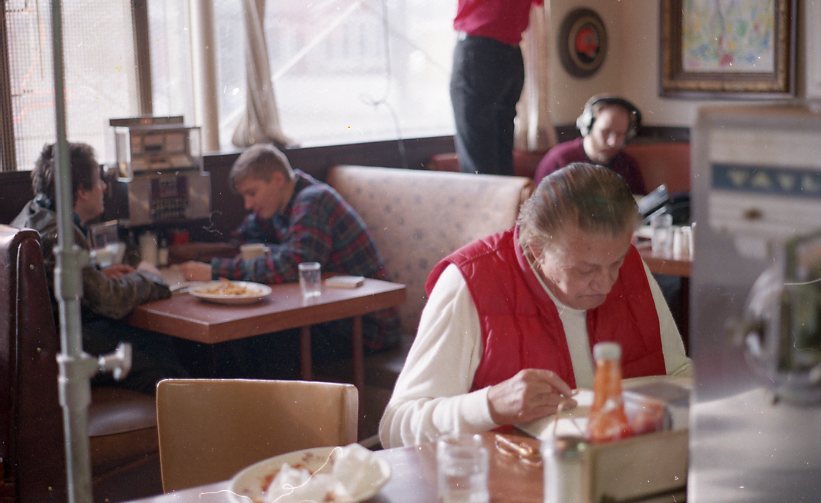
Jean Oser at the New Utopia Cafe 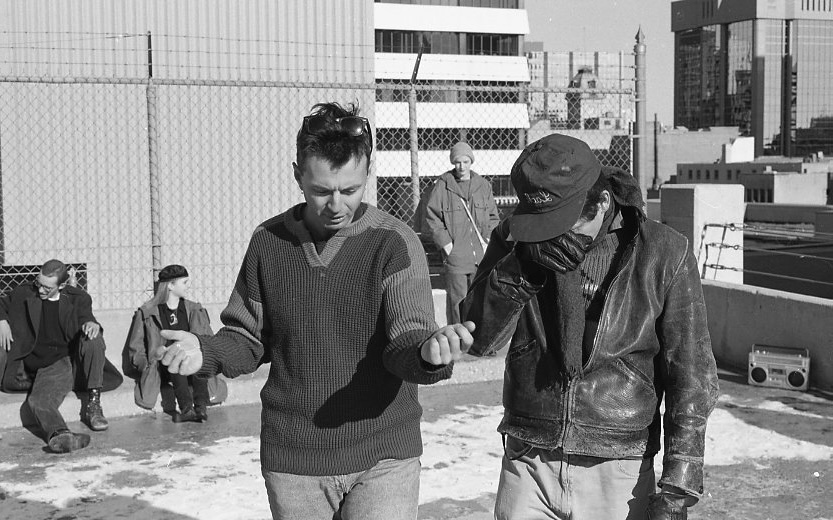
Mark Wihak & Mike Burns at the Bay Parkade on the set of The Ballad of Don Quinn 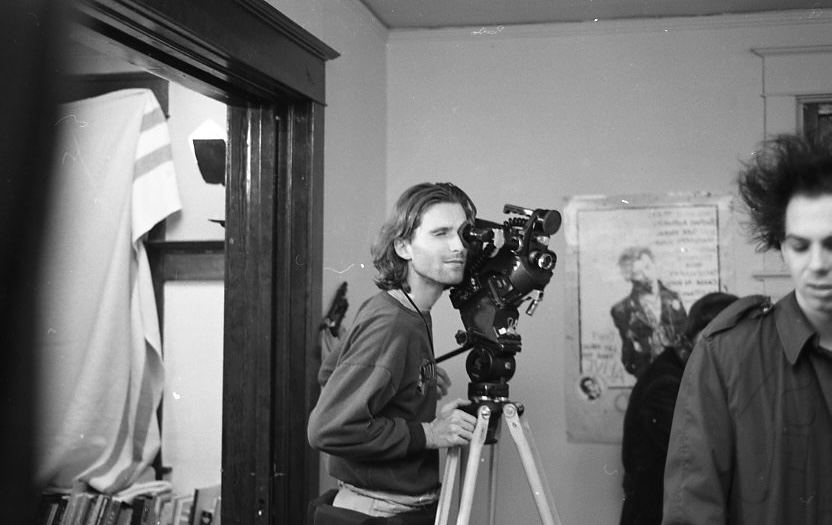
Ronald Jacobs 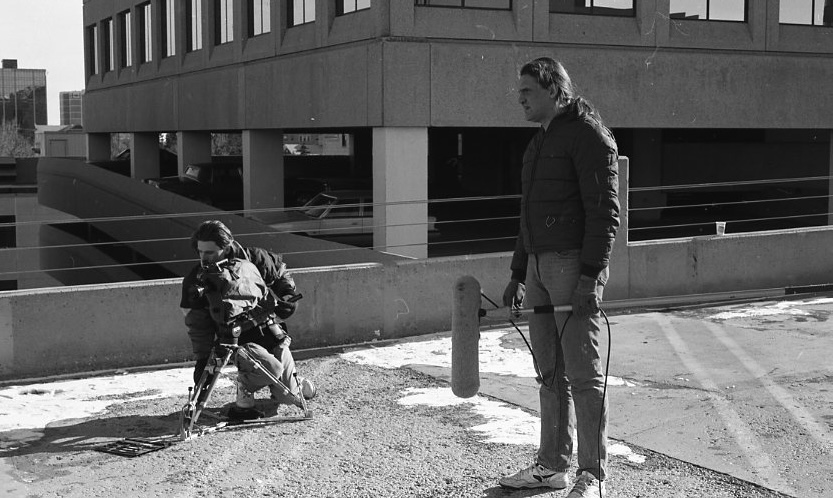
Ronald Jacobs & AJ Hordal 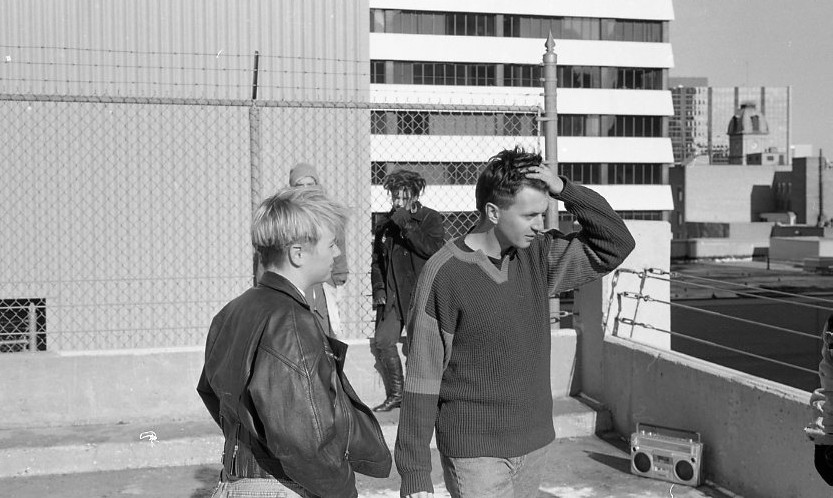
Mark Wihak looking confused on the set of The Ballad of Don Quinn 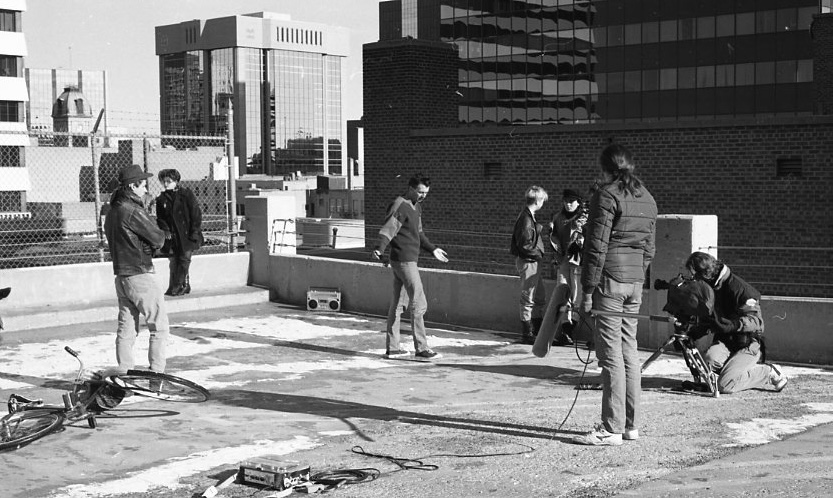
Shooting The Ballad of Don Quinn on the Bay Parkade 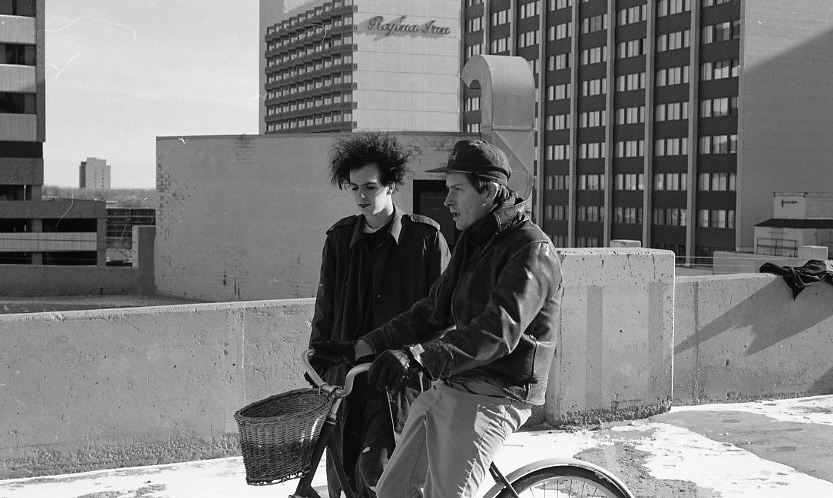
Mike Burns & Ian Hemingway 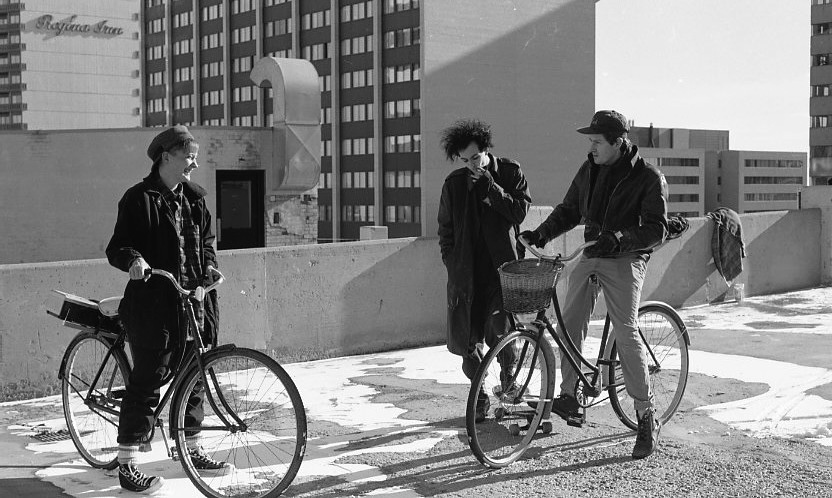
Laura Pollock, Ian Hemingway, Mike Burns 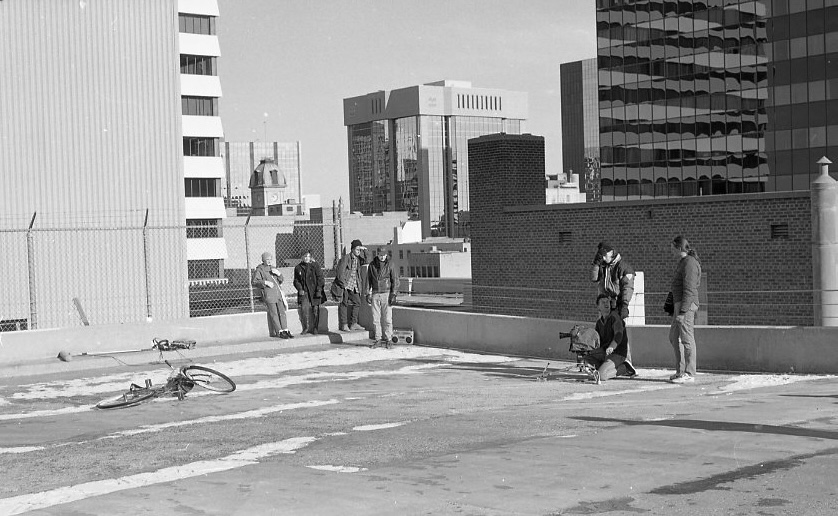
Shooting The Ballad of Don Quinn on the Bay Parkade 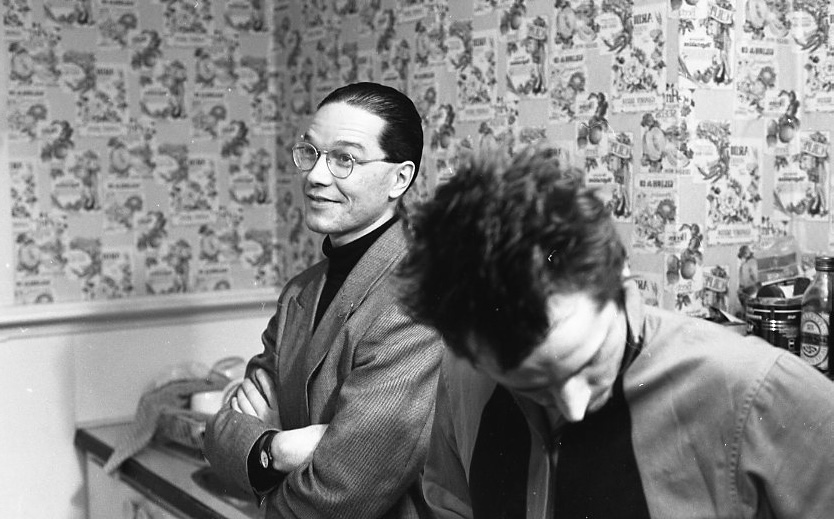
Dave Loblaw & Mike Burns 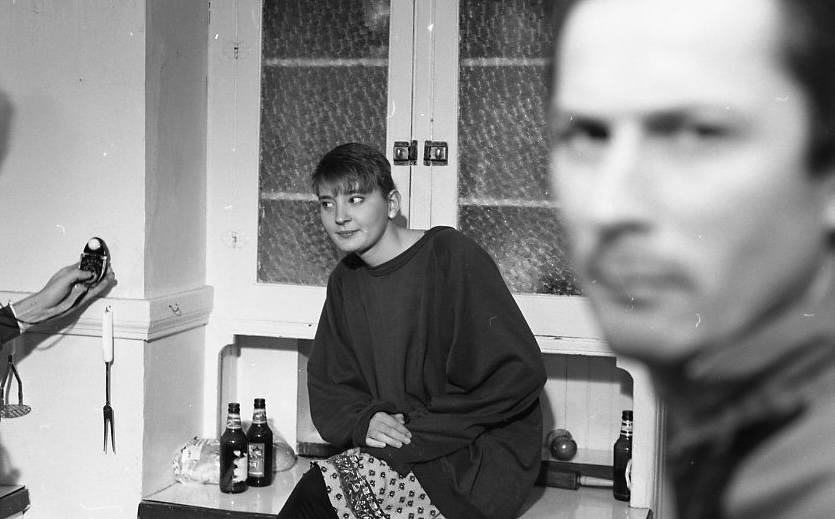
Laura Pollock & Mike Burns 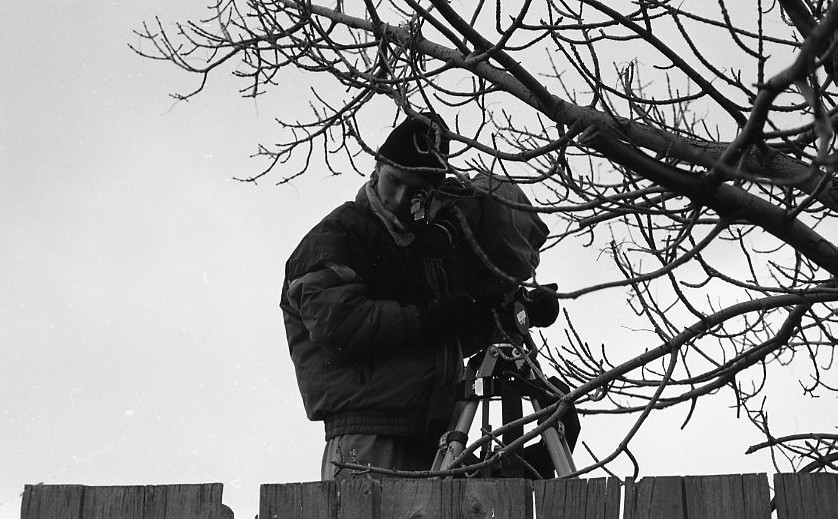
Ronald Jacobs shooting The Ballad of Don Quinn 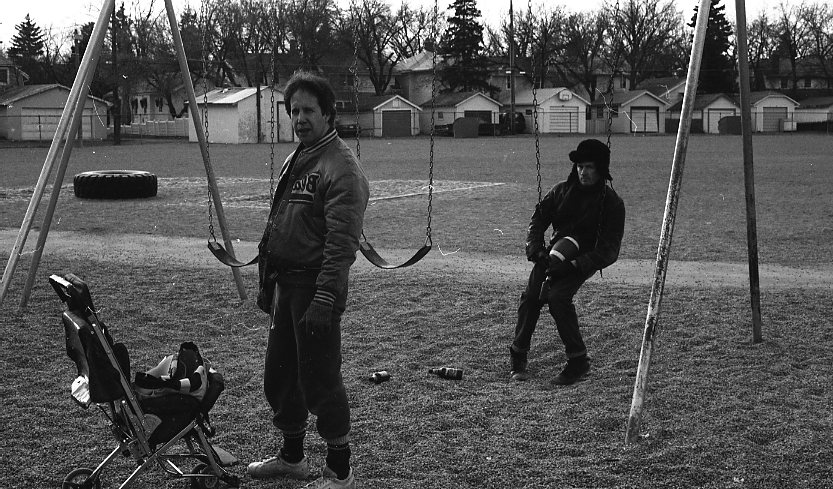
Alan Zweig & Mike Burns 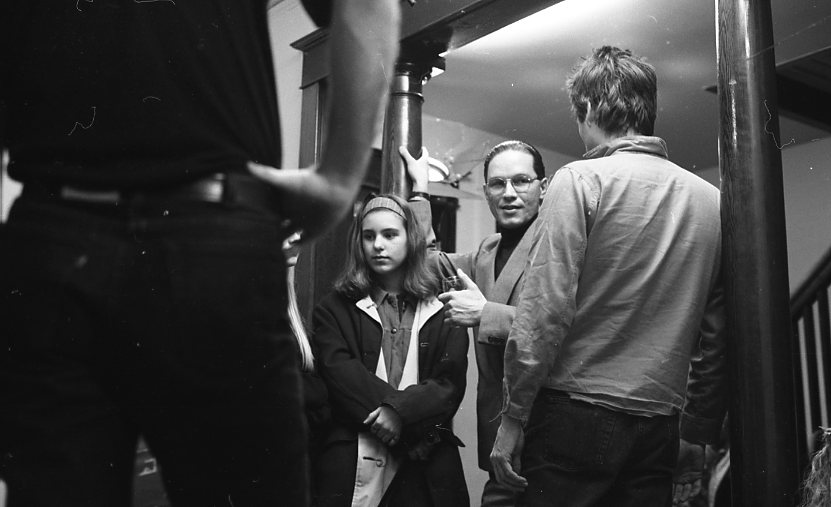
Dave Loblaw 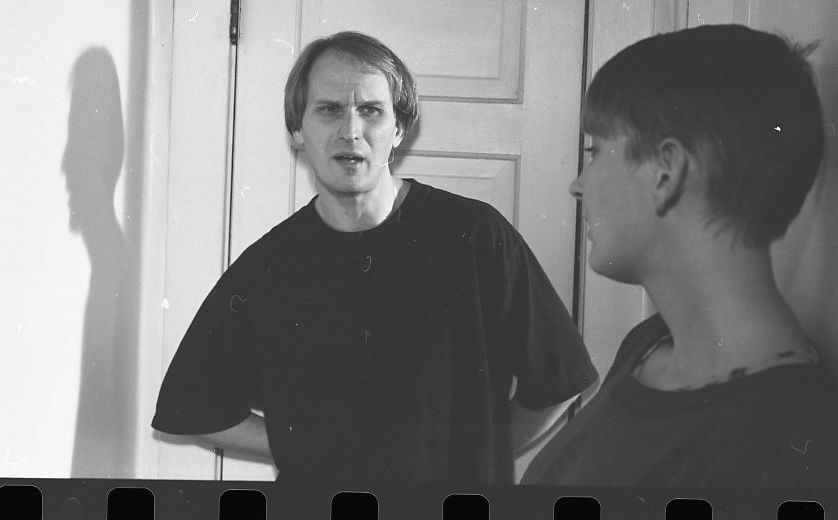
Chris Cunningham & Laura Pollock 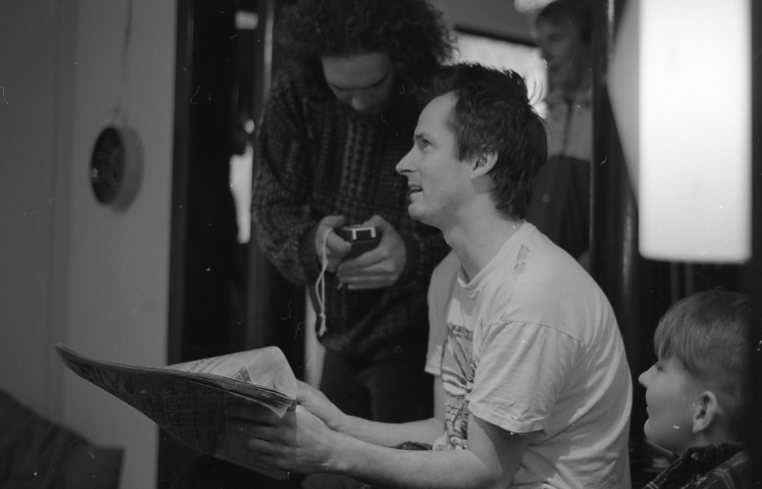
Mike Dancsok, Mike Burns, and Laura Pollock 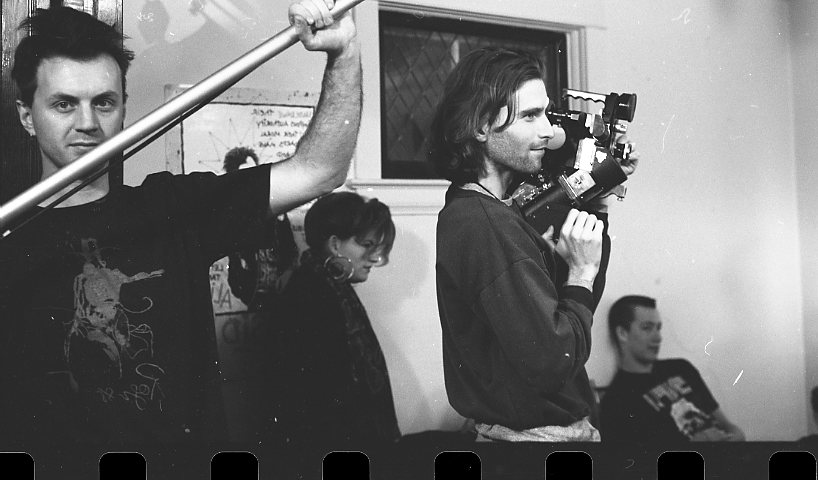
Mark Wihak & Ronald Jacobs 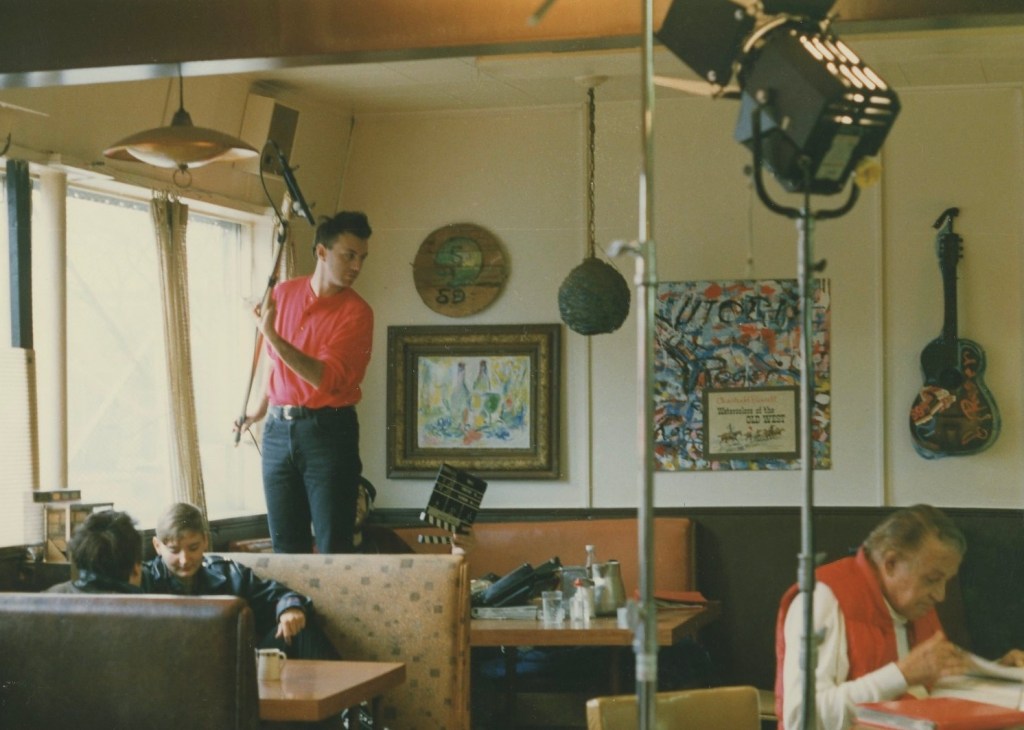
Mike Burns, Laura Pollock, Mark Wihak, Don Cornelius, Jean Oser
Jean Oser was an influential and beloved filmmaker who taught film in Regina in the 1970s and 80s. Jean’s film career started in Berlin in 1928 with an appearance in Hans Richter’s Ghosts Before Breakfast, and he went on to be the editor of several films by GW Pabst, before moving to France, and then Hollywood, where he directed the Oscar-winning short film Light In The Window. I took several classes from Jean at the U of R and in addition to his cameo in The Ballad of Don Quinn, Stan and Roz in River watch Jean in Ghosts Before Breakfast, and Lucy Oser’s surname in Resting Potential is another tip of the hat to Jean.
Cinematographer Ronald Jacobs had a very noisy Eclair NPR camera to work with, which caused extra challenges in post-audio. It was like having a sewing machine on set. Shot on 16mm Kodak 7222, the film was edited on a 16mm Steenbeck. Midway through picture-editing, I had the opportunity to go to Japan to teach English through the JET program, but I decided to stay in Regina and finish the film – a sliding door moment.
Eddie Lester (Les Holmlund) of Regina’s original punk band The Extroverts did the score, and the soundtrack featured the music of a number of Regina bands. Pat Butler and Steve Hasiak worked on the post-audio with the early digital audio platform Digidesign.
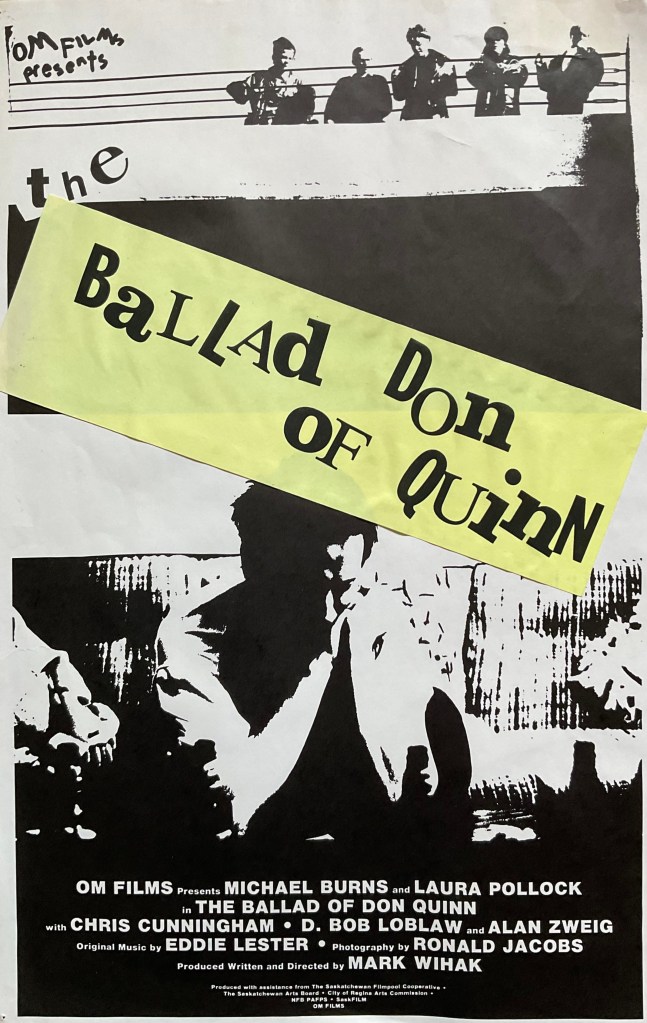
The DIY credits were a rushed effort after attempts to shoot “proper” titles on an Oxberry resulted in a camera with a load of backed-up film. I had to quickly shift to working with a Xerox machine and a glue stick. In the end, those seemed like much more appropriate graphic elements. I made some posters that had similar graphic qualities and some limited edition t-shirts that had the poster on the front in different colours.
The film had its debut as a work in progress at the 1992 Local Heroes Festival in Edmonton, and its full debut at the Toronto Festival of Festivals (now TIFF) in September 1992, to a capacity crowd at the long-gone Backstage Theatre. It screened as part of a trio of films with Rick Hancox, who I would get to know when I was completing my grad studies at Concordia, and Kid In The Hall Bruce McCulloch.
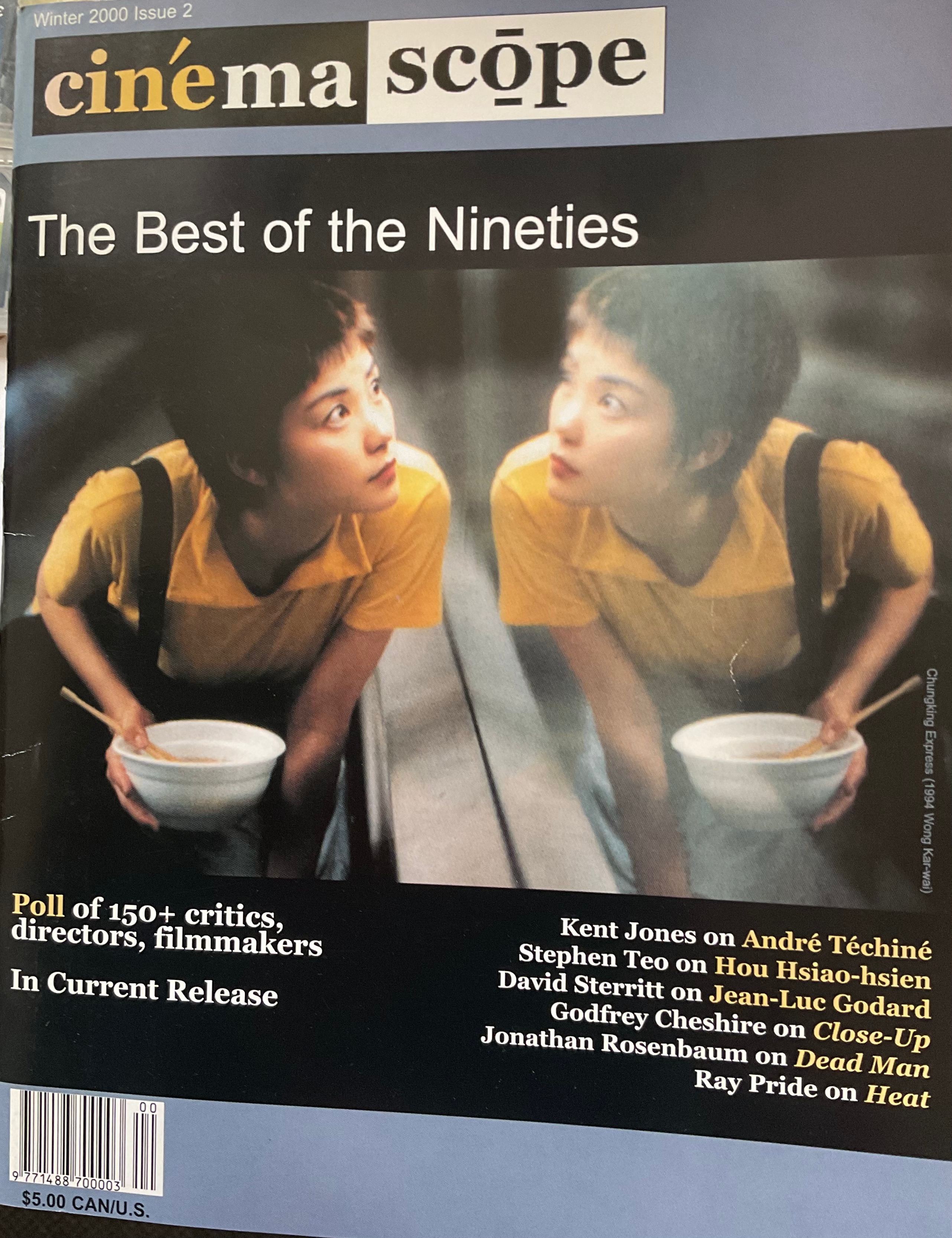
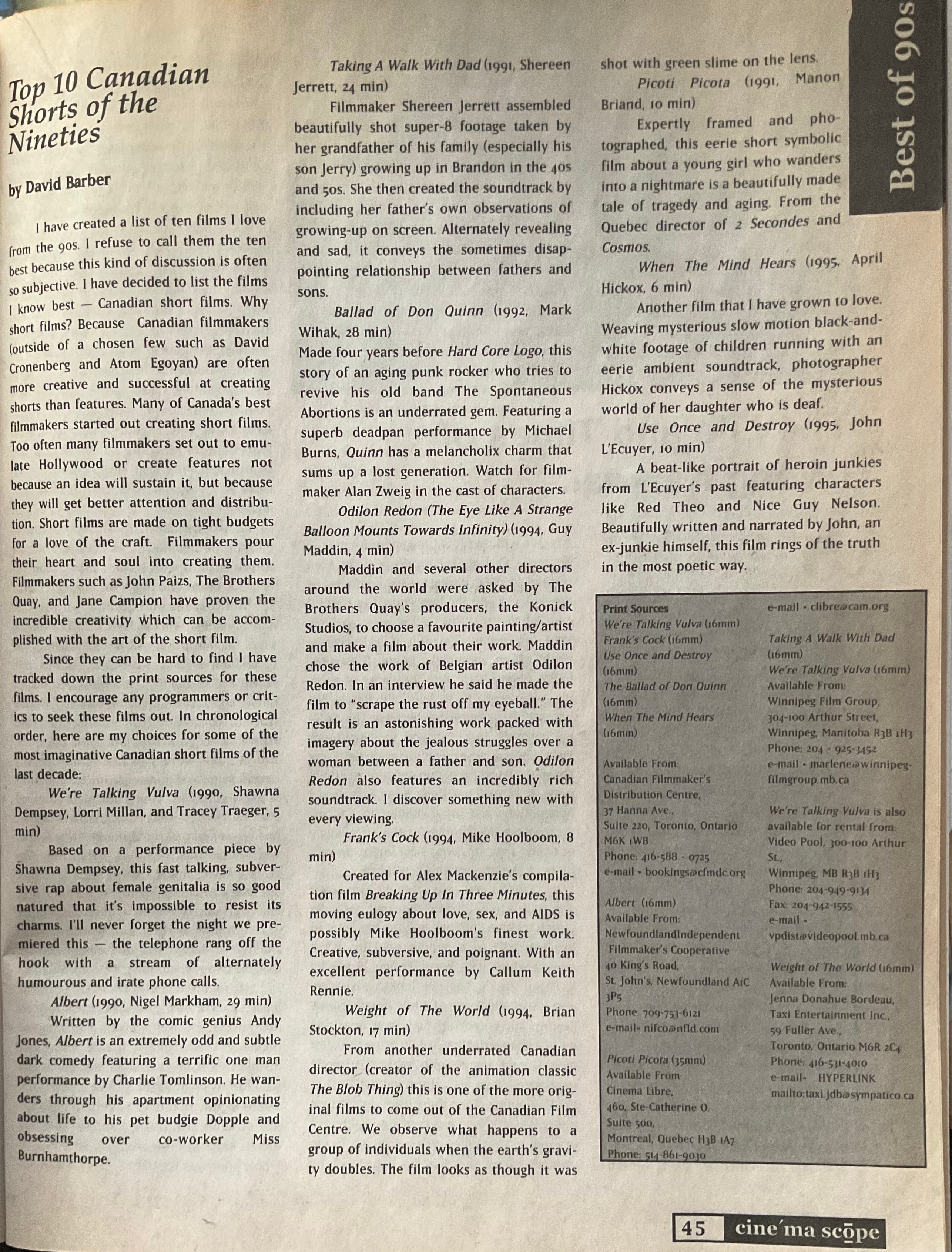
The late, great Winnipeg programmer Dave Barber included The Ballad of Don Quinn in his Top Ten Canadian Short Films of the 1990s in Cinema Scope magazine.
For a couple years after finishing The Ballad of Don Quinn, I tried to get a feature-length version made with the title Days & Months & Years. You can find a draft of that on the Other Stuff page.
The film was produced with the support of a grant from the Saskatchewan Arts Board (now known as SK Arts), and I used gear from the Saskatchewan Filmpool Cooperative. The film benefited from the NFB program PFAPS, which meant that the film stock was developed for free at the NFB’s Montreal lab, though there was a couple months turnaround for the “rushes”.
Mike Burns’s son Marshall was born while we were making Quinn. Maybe a decade later, Marshall and his younger brother Piper made a video version of Don Quinn starring themselves and a couple friends. Marshall appears in my film River along with his bandmates in Rah Rah during an appearance at the Regina Folk Festival. An expanded version of Rah Rah appears in Eric Hill’s film in I Heart Regina.
HD scan from 16mm negative
Mike Burns & Laura Pollock
Chris Cunningham, D. Bob Loblaw and Alan Zweig
Cinematographer – Ron Jacobs Original music – Eddie Lester
Producer, Writer, Director, Editor – Mark Wihak
