(stories from) The Land of Cain 1995
(stories from) The Land of Cain was made while I pursued an MFA at Concordia University in Montreal.
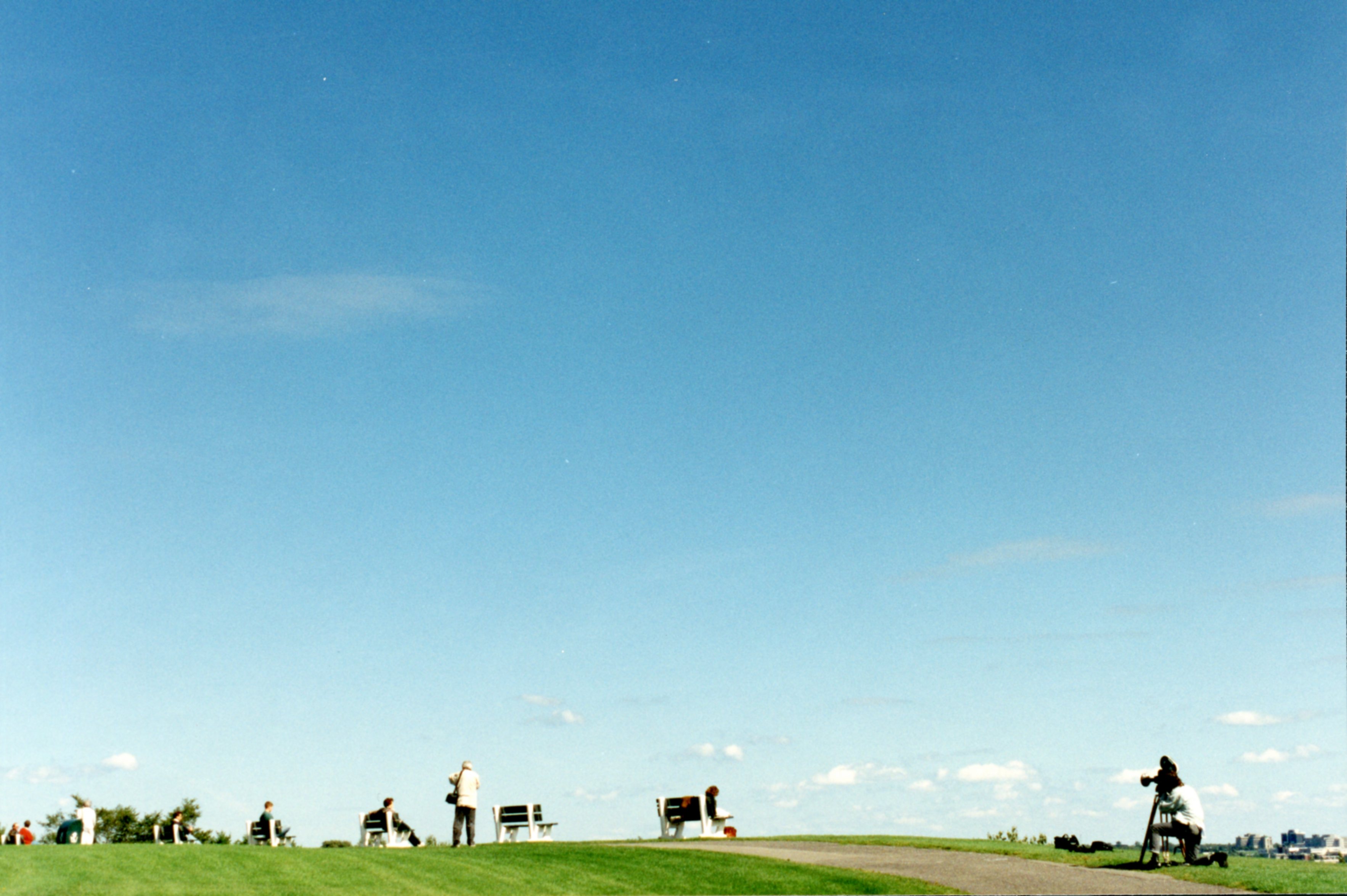
The film grew out of an experience I had when visiting Montreal in 1990 for the Montreal World Film Festival. The Meech Lake Accord had crumbled a few months earlier, the Oka Crisis (aka the Kanesatake Resistance) was escalating, and I found myself wandering around the ruins of the Expo 67 site. Its crumbling condition seemed like a useful metaphor for the state of Canada at that moment.
As I was working on the film, the Charlottetown Accord was defeated in a referendum, and Quebec was moving towards a referendum on independence.
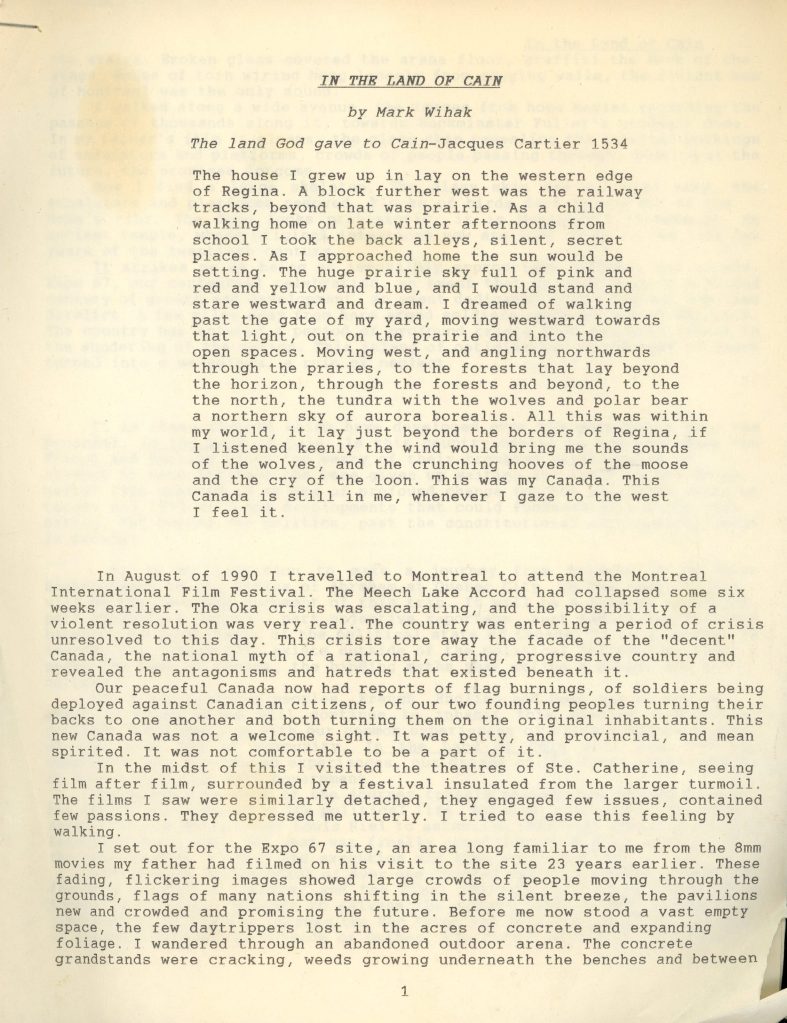
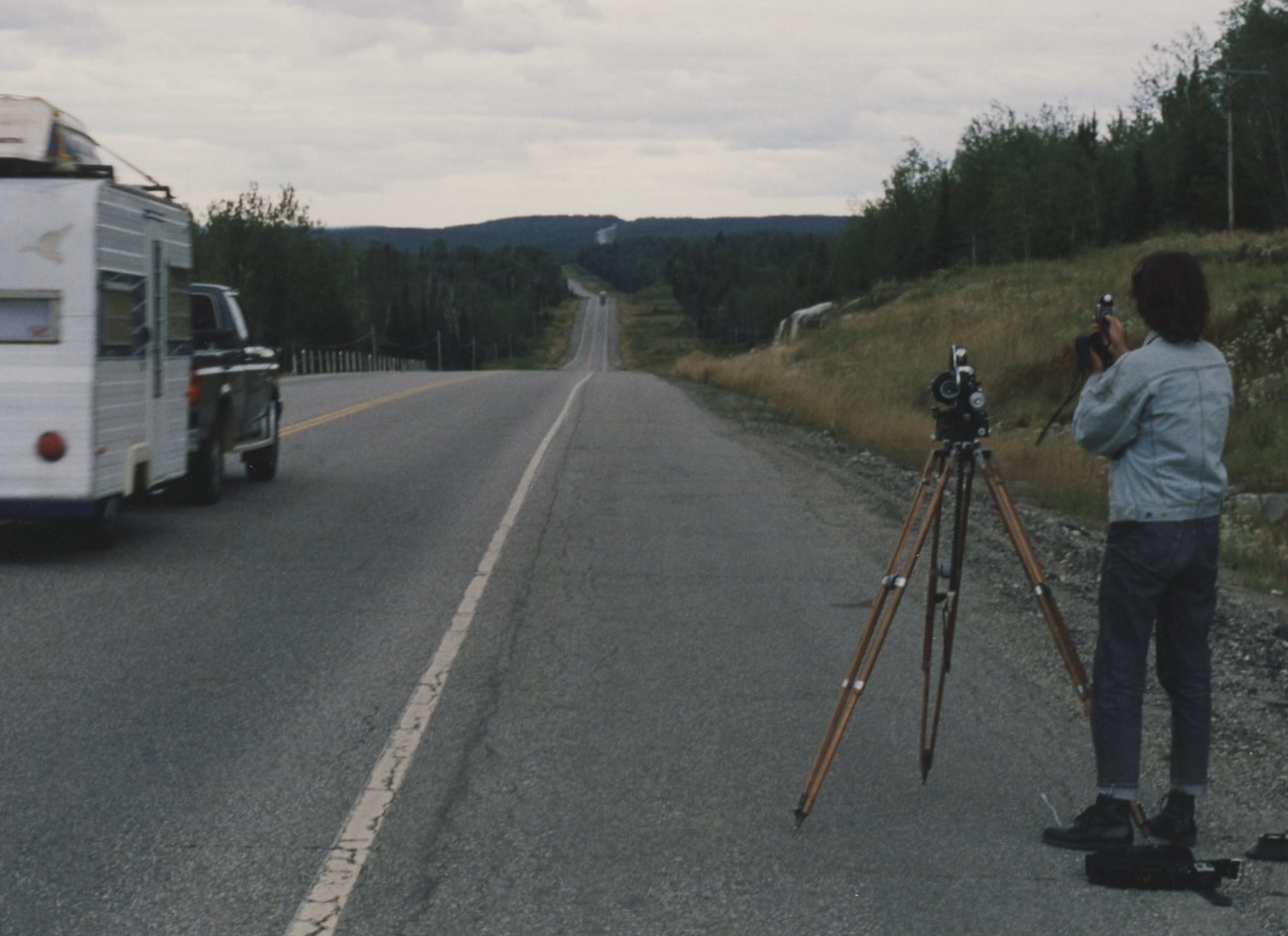
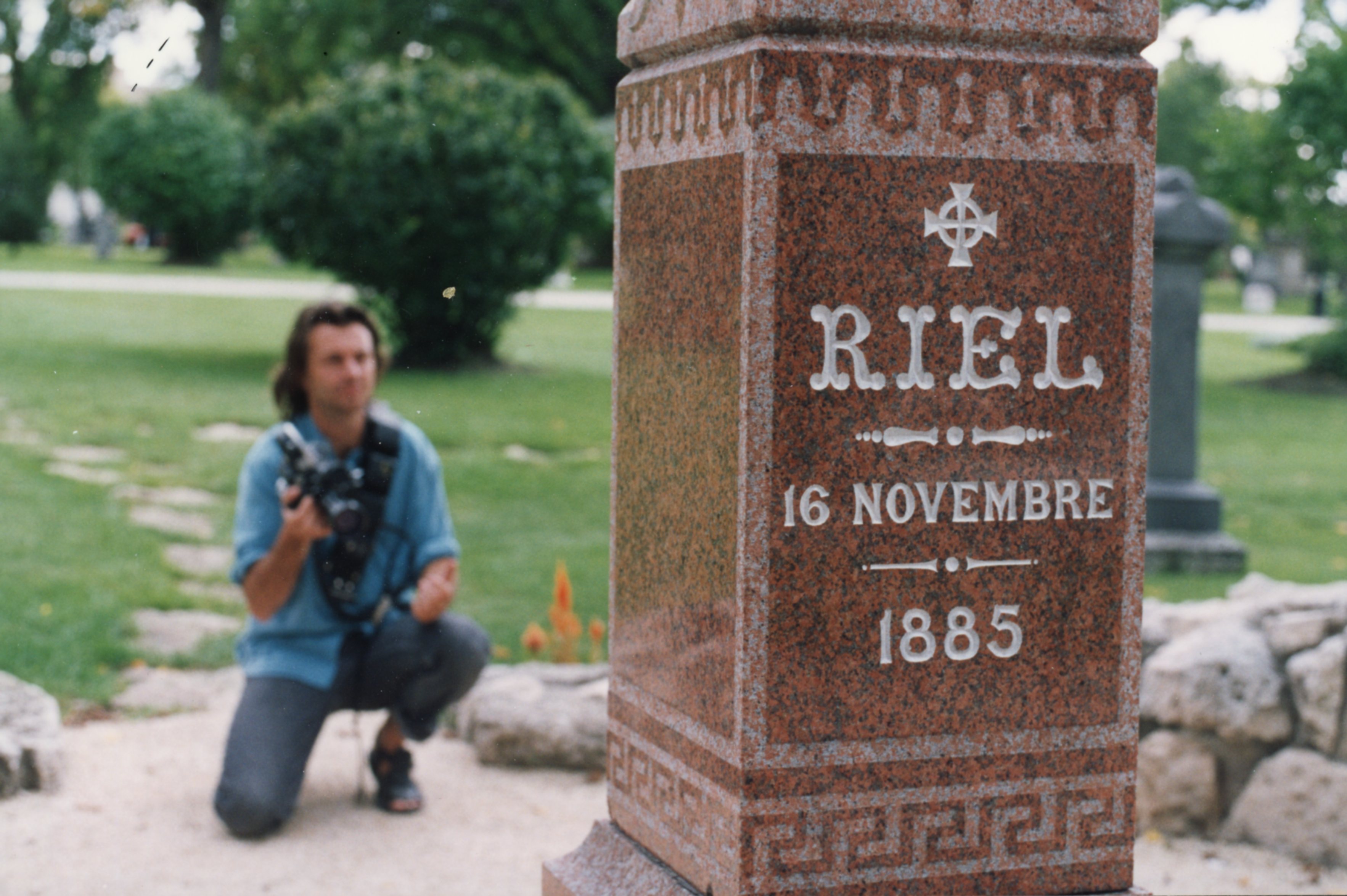
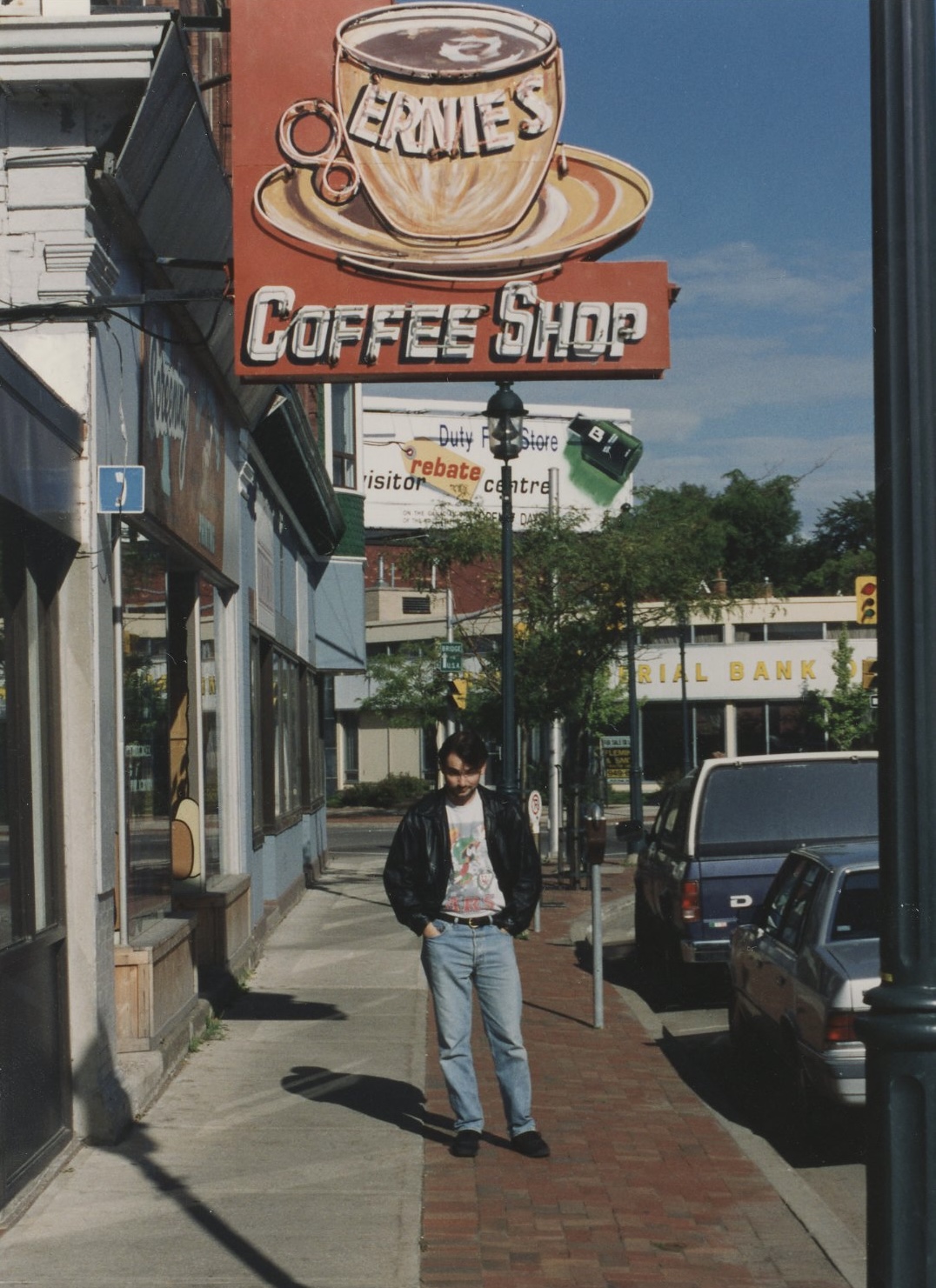
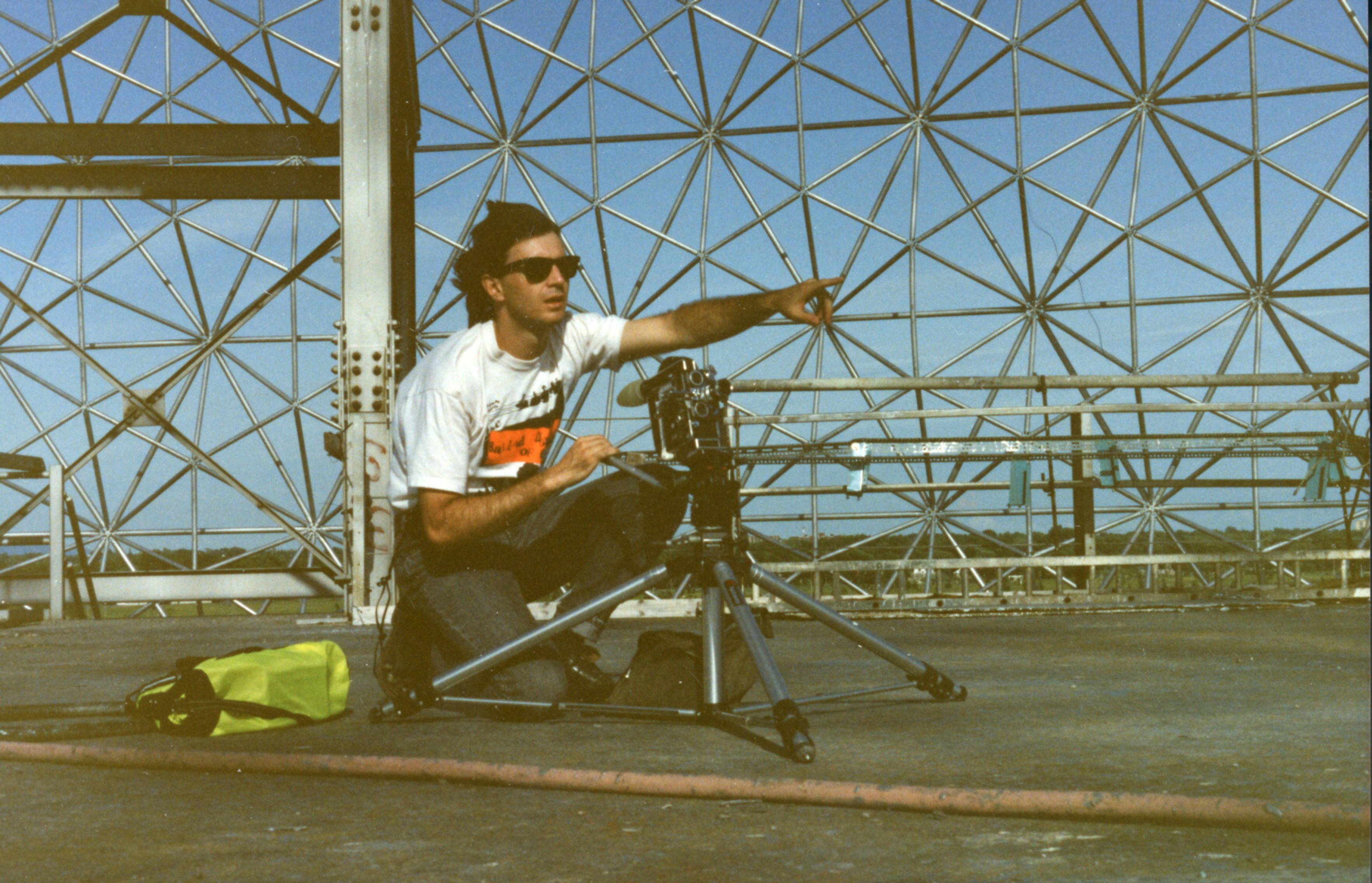
A thread running through the film is a 3300+ kilometre road trip from Batoche in Saskatchewan to the Plains of Abraham in Quebec City. I was joined on the road by Regina filmmaker Brett Bell. We made stops in Winnipeg, Thunder Bay, Sault Ste. Marie, North Bay (where our old motel room had fading photos from Expo 67 on the wall), Ottawa, Oka, and Quebec City. On our final night at a restaurant outside Quebec city we had an encounter with the Federal Minister of Communications, who seemed perplexed to find two Anglos from western Canada having dinner there. I shot at a family reunion in Saskatchewan and sneaked into Buckminster Fuller’s geodesic dome on the old Expo 67 site.
Brett shot video along the way, and captured moments of the trip that didn’t end up in my film, such as when we were flipping through the TV dial in a Quebec City hotel room and saw a former classmate from film school at the U of R pulled out of the audience on the Arsenio Hall Show and made to dance.
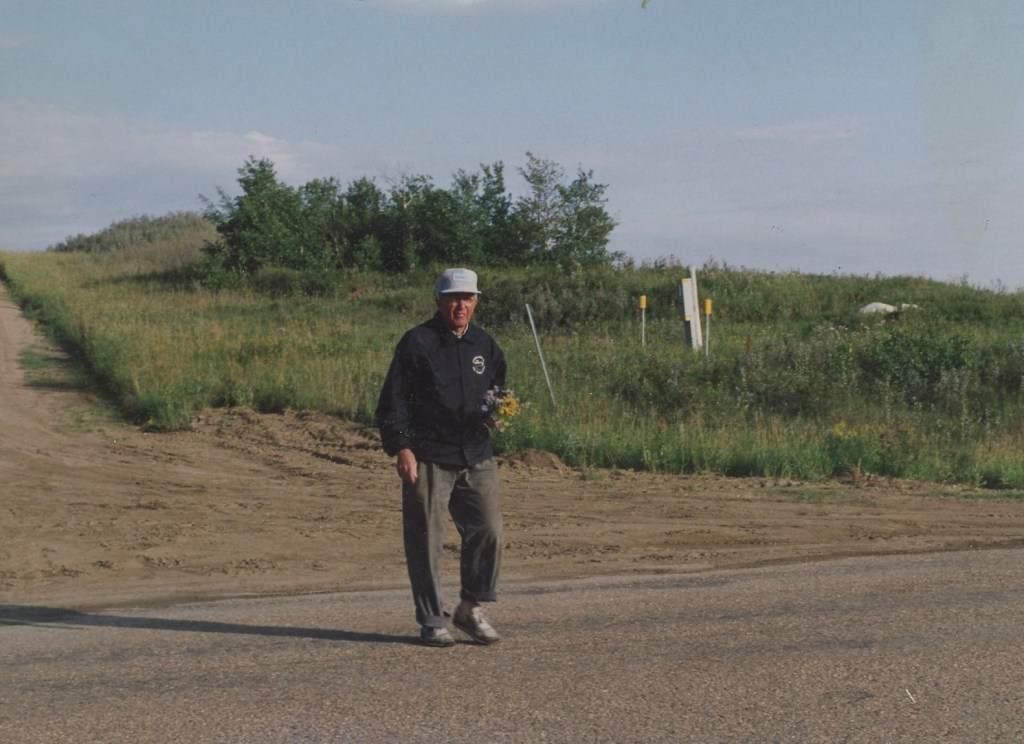
I have a very fond memory of filming the opening shot: floating down the South Saskatchewan River at Batoche. I’d rented a small boat, and my father Fred, brother Steve, girlfriend Susanne and I drove the three hours from Regina. By the time we got to the riverbank, a light rain was falling. We got the boat in the river, but couldn’t get the outboard motor started. After several furious attempts and rising anxiety, it finally kicked in and my father navigated us up river, avoiding the sand shoals, as the rain continued to fall. As we got to the point on the river where I wanted to shoot, the rain faded away and the sun came out. We got the shot, and before driving back to Regina, spent some time picking wildflowers near an onion-domed Ukrainian church. I still have a photo on my fridge from that day of my father clutching a bunch of flowers.
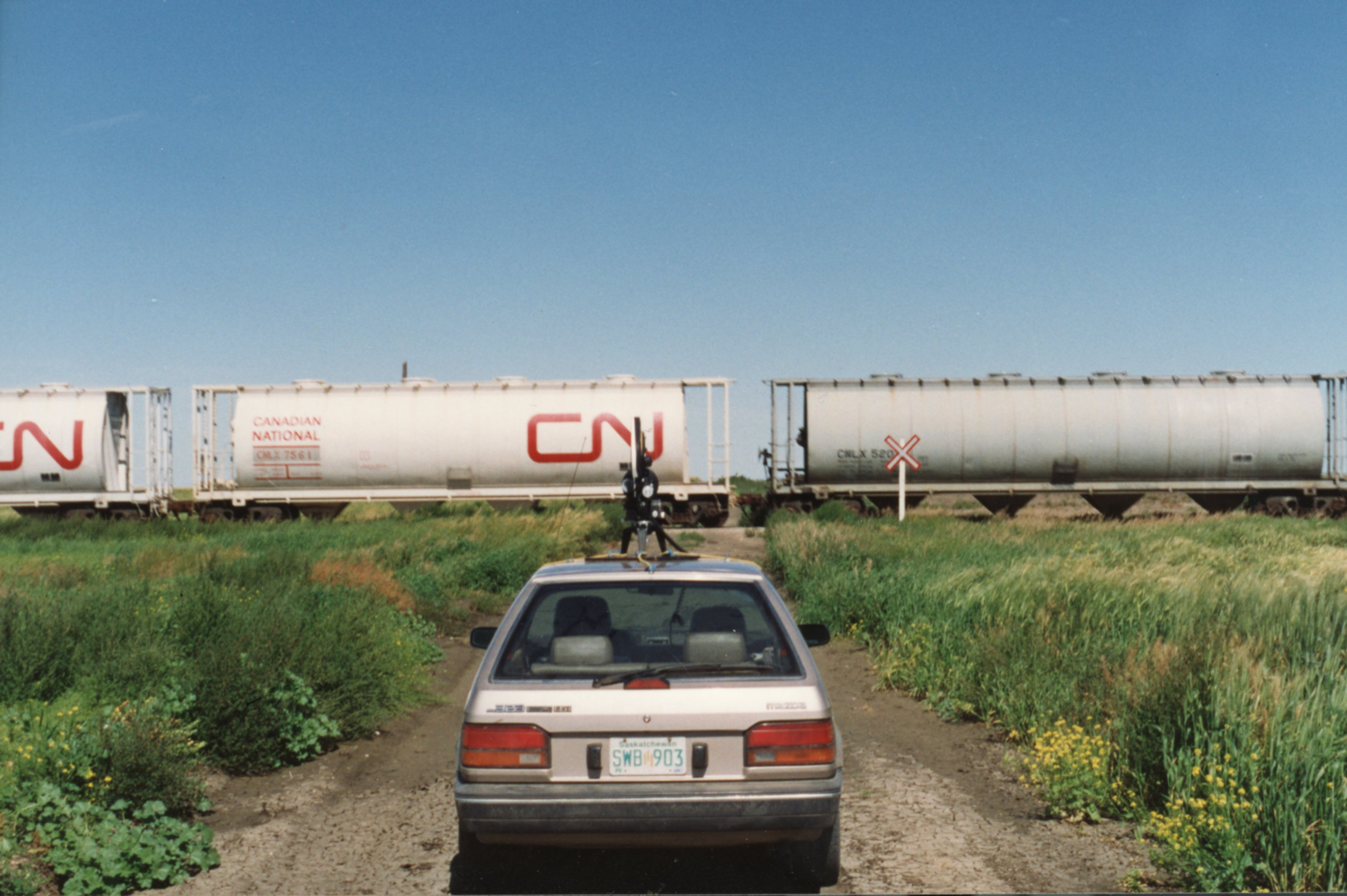
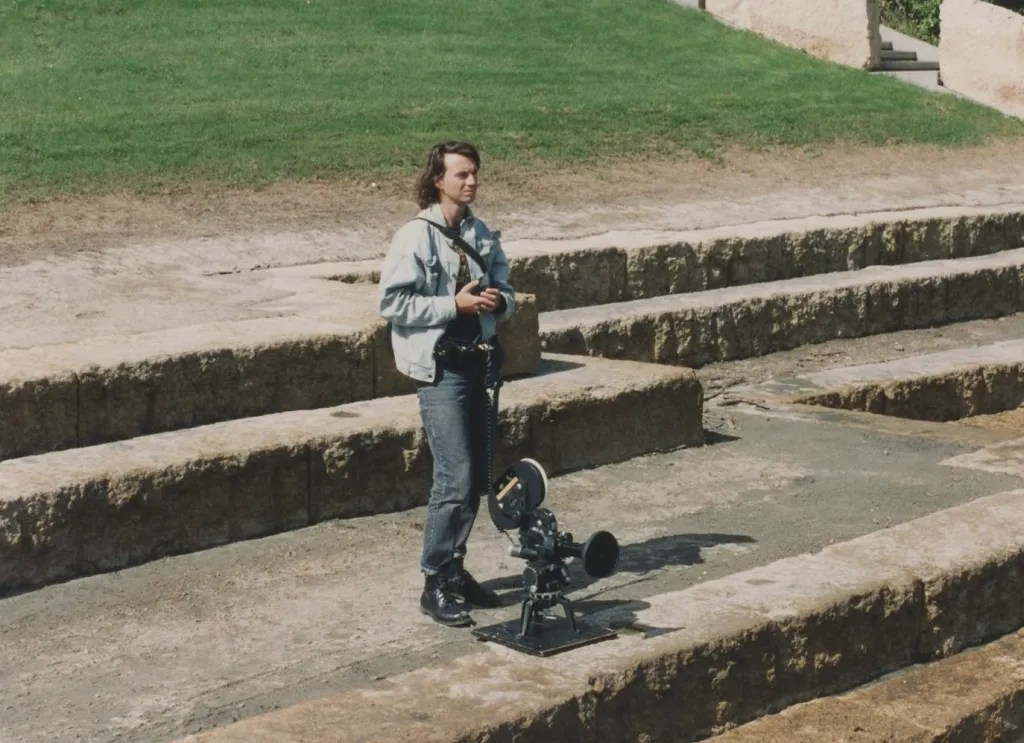
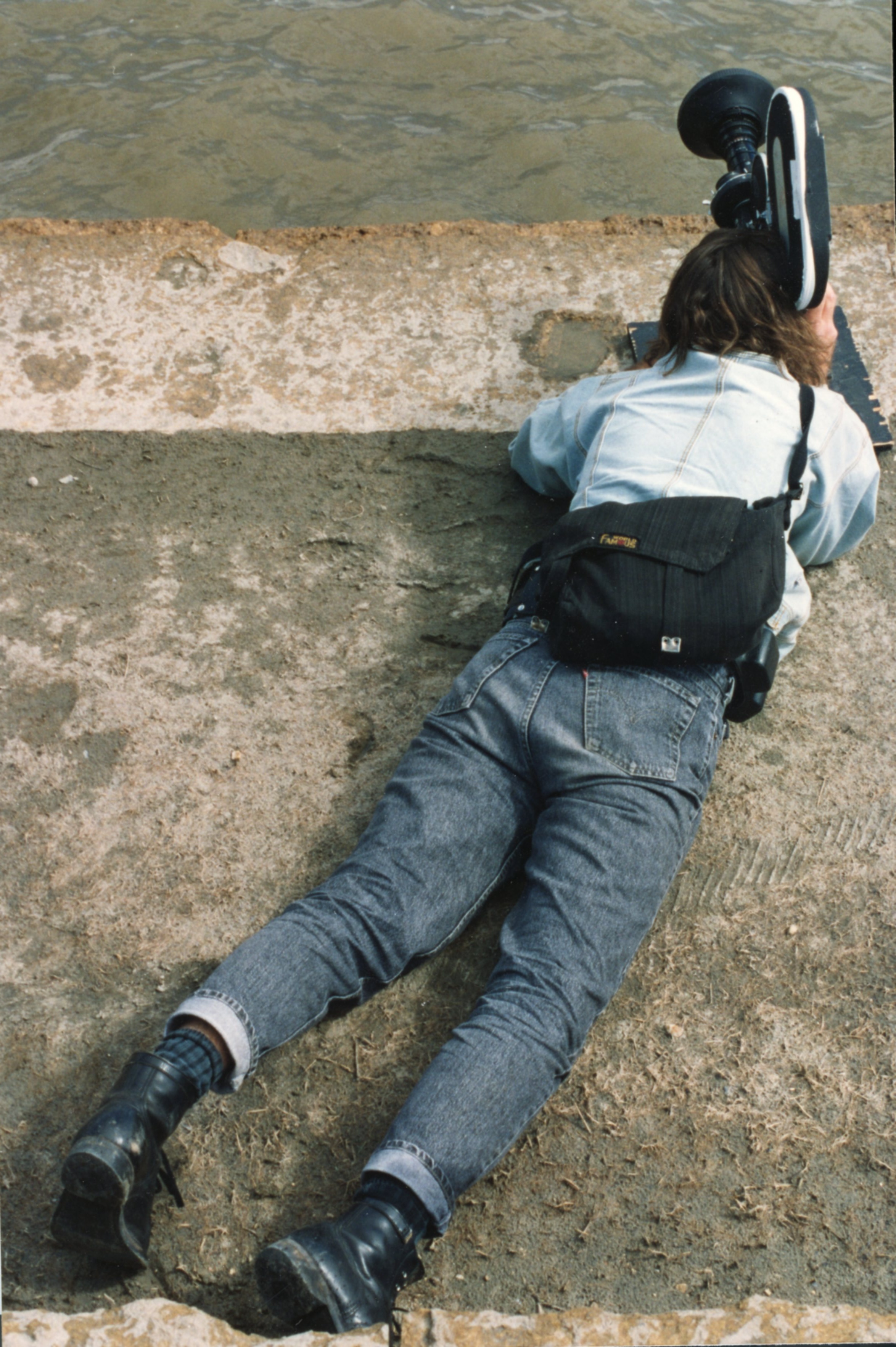
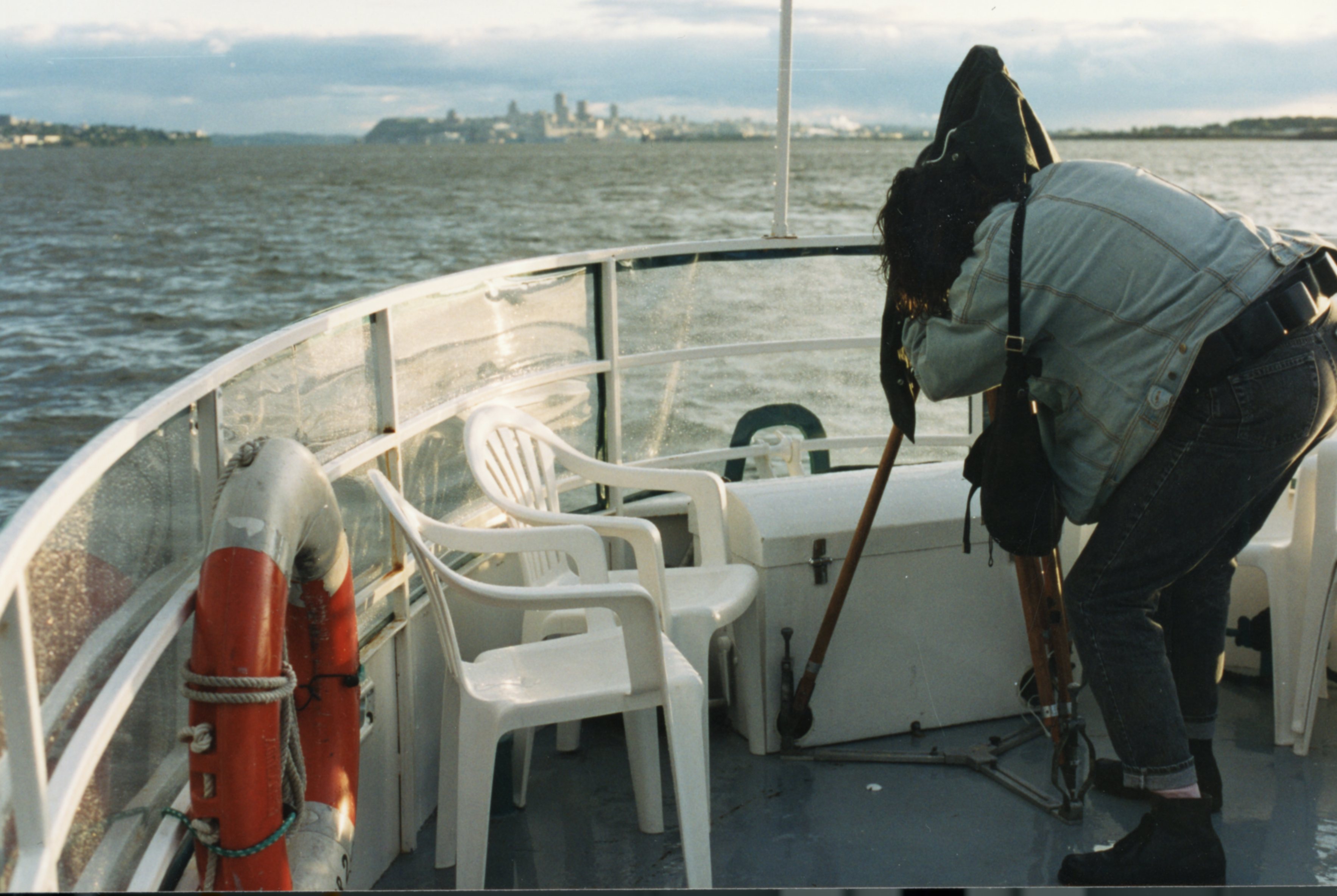
(stories from) The Land of Cain was shot on 16mm Kodak colour negative, mostly with an Arri S camera. It also used home movies my parents shot on Super 8mm film when I was a child, including footage of my father and older siblings’ visit to Expo 67, which I re-photographed with an optical printer.
The NFB lab processed all the film stock, and when they screened several thousand feet of rushes for me simultaneously on fours projectors, the experience triggered an idea for a new project The Interstial Zone.
(stories from) The Land of Cain was the first of what I think of as the “collected and assembled” films. Cinephile and Vous êtes ici, are others and I suspect Project Pedestrian will be one too. In the collected and assembled projects, I begin the production phase with some ideas to explore, but it’s really only in the edit suite that I figure out what the film will be.
(stories from) The Land of Cain was edited on a 16mm Steenbeck. For the soundscape, I was inspired by Glenn Gould’s radio essays made for the CBC, particularly The Idea of North. I shot the whole film MOS, and while building the soundscape in editing, I recorded interviews with people and found excerpts on radio and TV that tracked weather forecasts and ongoing news. Working with two tracks of audio at a time on the Steenbeck, I wasn’t quite able to match Gould’s tapestry of voices, and of course he knew a lot more about counterpoint that I do. The final sound mix was done at Concordia University.
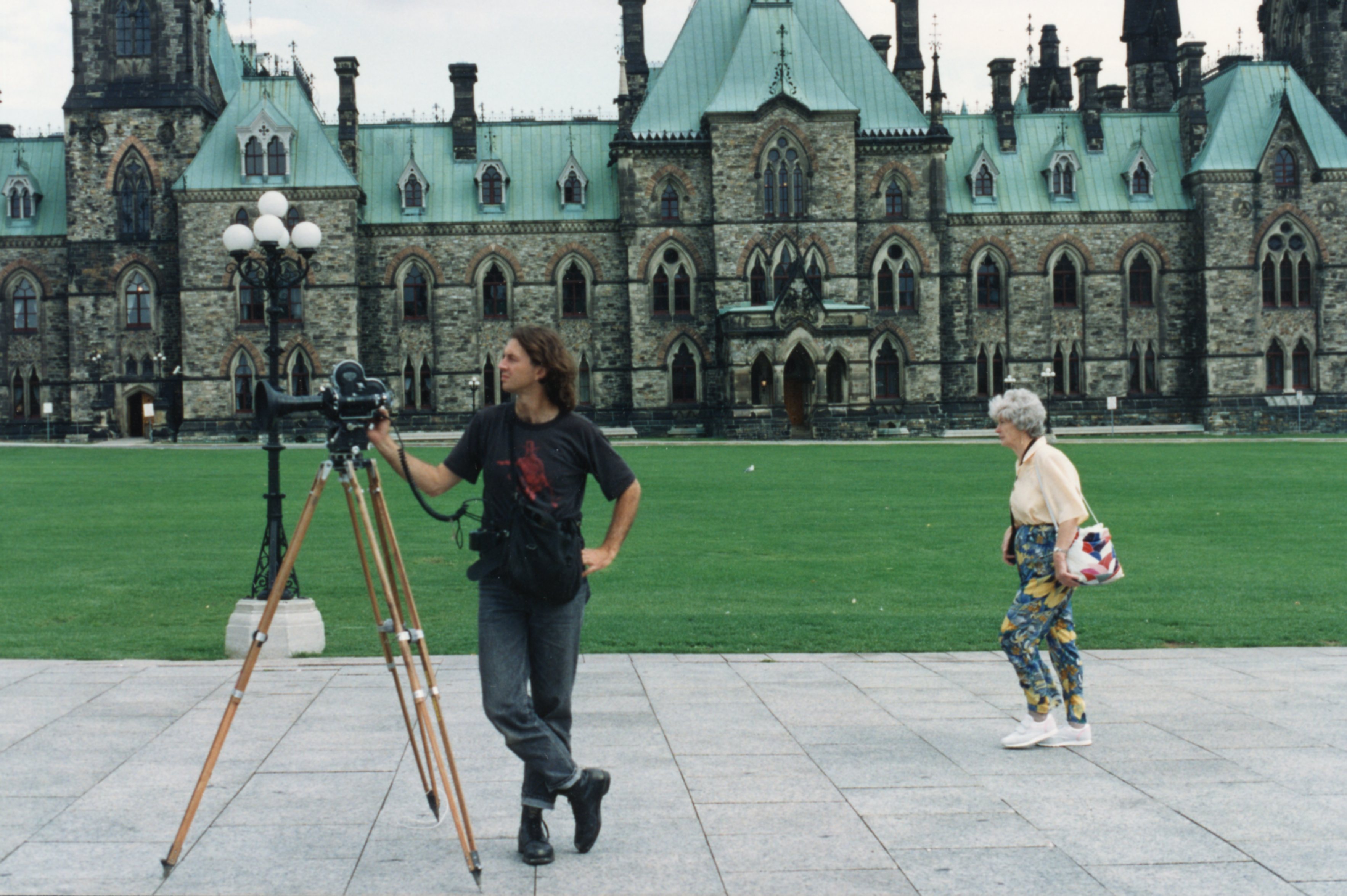
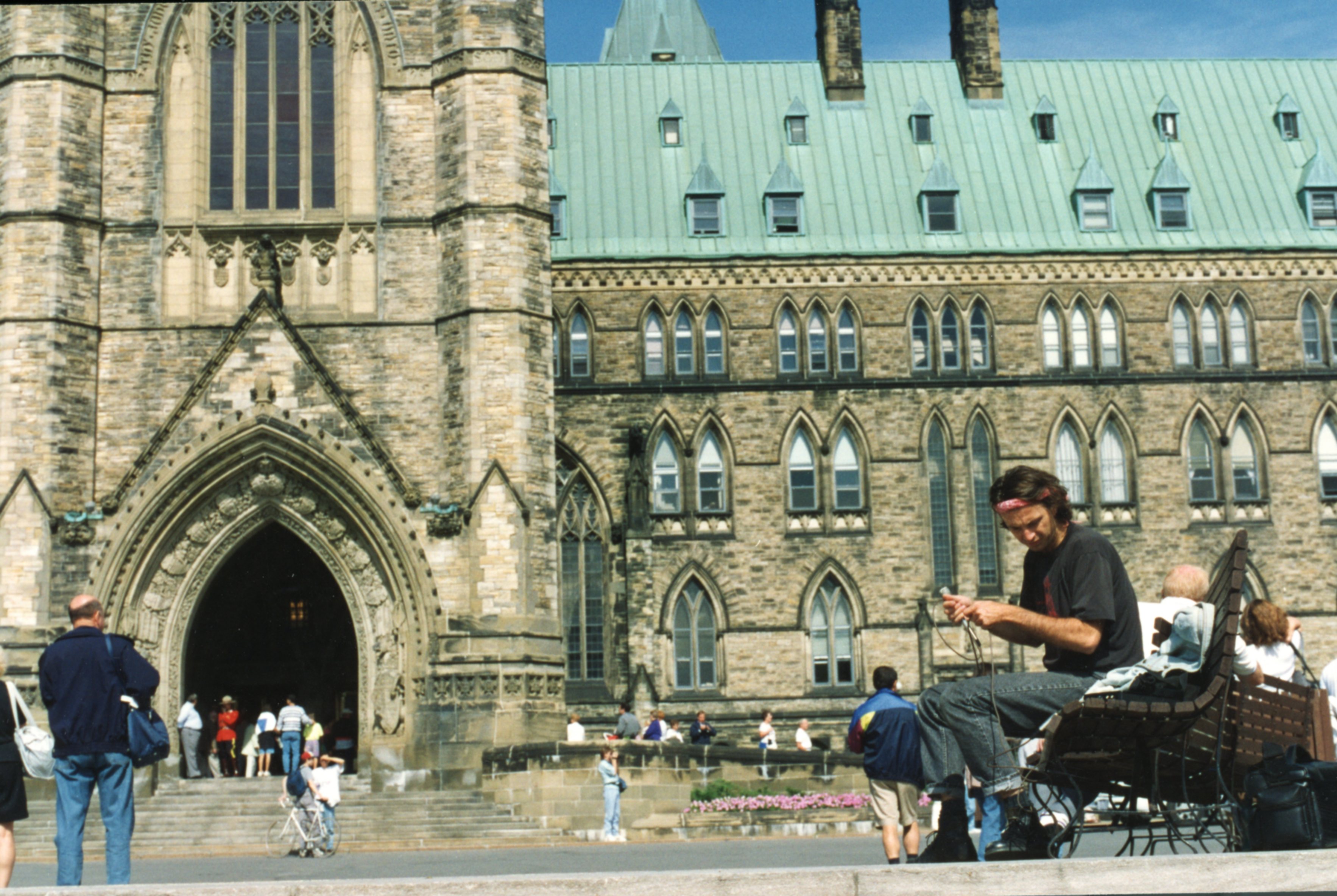
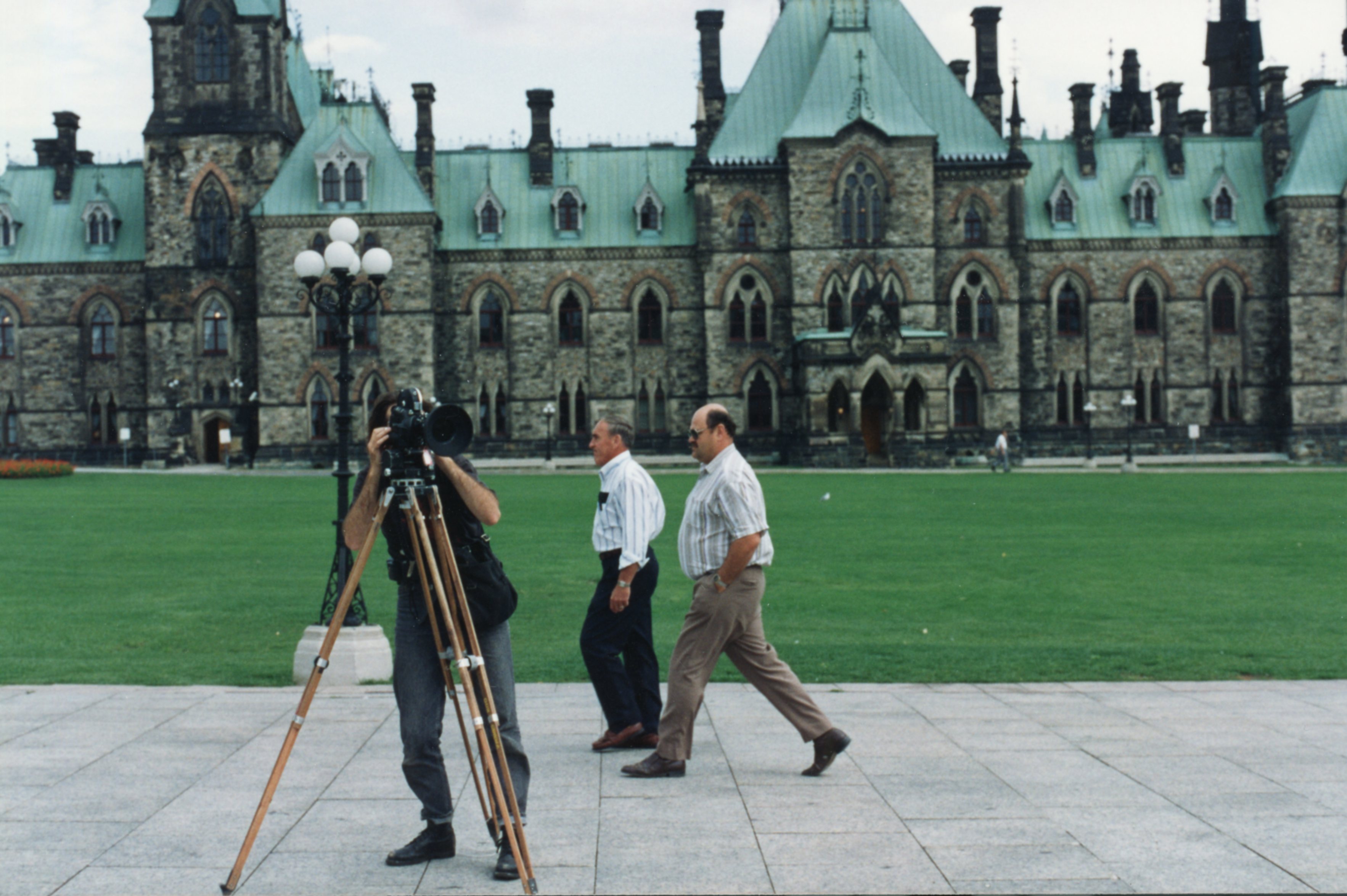
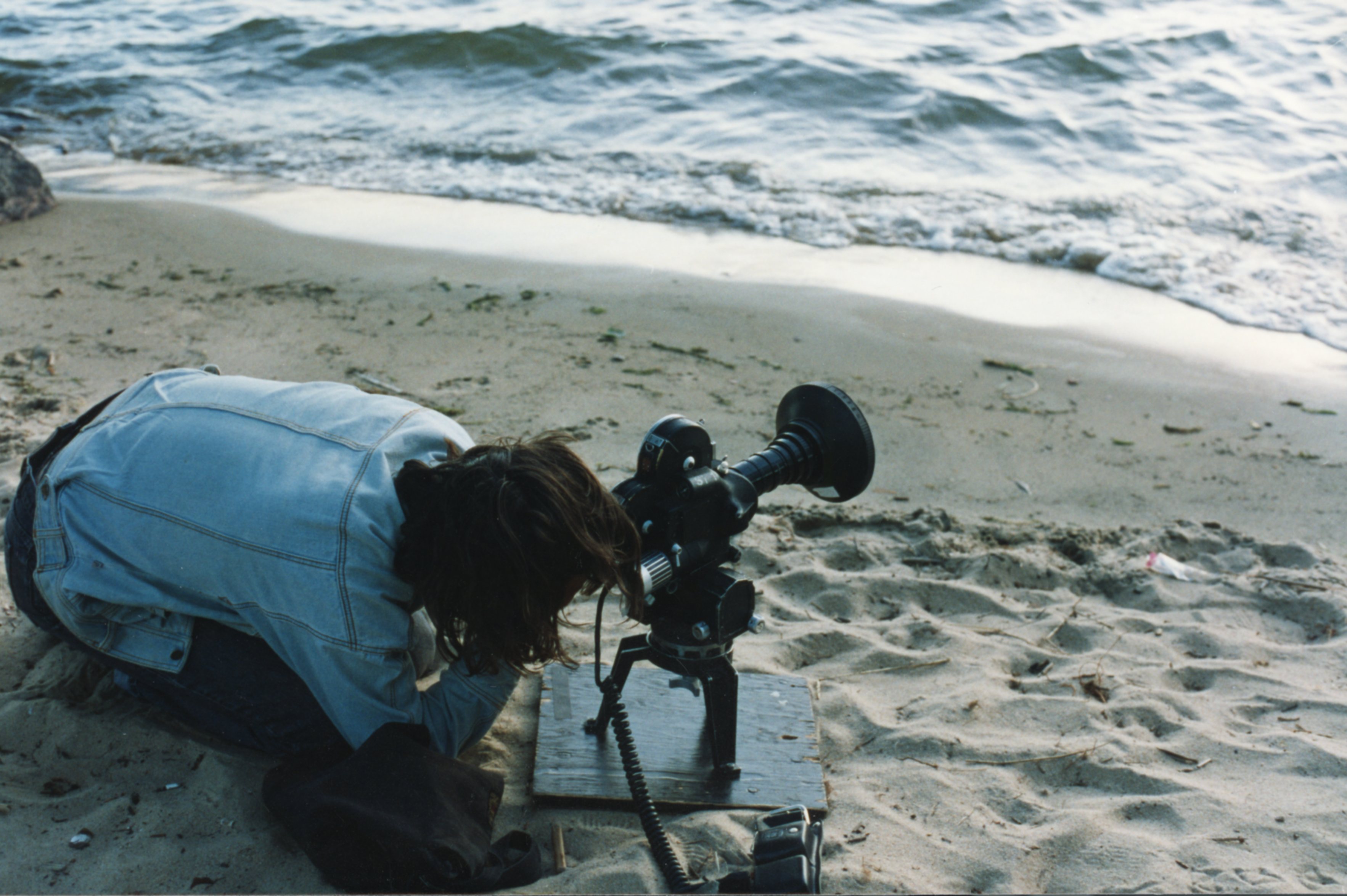
The Etobicoke band Rheostatics very kindly let me use a couple tracks off their album Melville.
The film was produced with the support of grants from the Canada Council, Saskatchewan Arts Board, the Saskatchewan Filmpool, and the NFB PAFPS program – all the film was processed at the NFB’s Montreal laboratory.
The film had its debut at the 1995 Vancouver International Film Festival, and shared the festival’s Best Canadian Short prize.
I kept a sporadic journal while making the film, and when the film was completed, I incorporated some of the journal into a piece I wrote for the Saskatchewan Filmpool’s Splice Magazine.
